MY PRODUCTION JOURNEY
Before
being given the final brief, we were assigned to create a video about anything
and put it together. This is what we managed to put together:
This was my first attempt at filmmaking, although it may not be the greatest, it gave me the chance to understand the world of film, how to hold a camera and how to edit clips together. This will be vital in the creation of my actual film.
Who? What? When? How? Why?
We were put
into groups to work together, these groups were given and not chosen, because
in the media industry you don’t always have the luxury of working
with the people you want to. My group consisted of
We were given the task to create
either a short film or an introduction to film lasting three to four minutes in
length. We were free to choose any idea from any genre, given access to all
equipment required and given enough preparation time to achieve the task. I
look forward to working on this project, as it’s more practical and a chance to put the things I have learnt into
practice. I am also adding to my skillset – as last year I only worked with
sound, but this year I will be incorporating and considering visual as well as
audio.
We were given a deadline to finish
to finish the film and as a group we had to figure out how we were going to
meet this deadline.
Deciding to work efficiently, we
broke the whole creation process into a ten-week production schedule. This
consists of pre-production work like research and planning, all the way to
editing and a film premiere.
This is an opportunity to tap into
our creative side, as we were not given many restrictions in terms of the
brief. It also presents the prospect of putting together everything we have
learnt inside and outside of school – I consume media everyday, this will be a
chance for me to make the transition from a consumer to a producer.
Furthermore, when we successfully complete the task, it will show how much
research we have done and how we identify things like codes and conventions
when we actually watch films.
Finally, I am being equipped with
the skills to become successful in the media industry.
PRE-PRODUCTION
WEEK ONE: BRAINSTORM,
RESEARCH AND ANALYSIS
As a group,
we decided that the first thing we were going to decide was what genre we want
our film to be.

After
successfully choosing Thriller/Horror, we extended our research by looking at the codes and conventions of
our chosen genre – this gives us an idea of how feasible our idea was and what
kind of direction we should be looking towards in terms of ideas in our films.
The codes
and conventions of Thriller/Horror
are:
Codes & Conventions of a Thriller/Horror genre.
- Quick changes of camera angles and scenes/shots.
This can be done by editing the scenes very sharply so that they are played very quickly after each other.
- Music expected to be used: eerie and quite tense. Can be quite fast paced.
This helps to build the atmosphere and allow the audience to guess that something is about to happen.
- Usually scenes are shot in quite small and confined spaces.
- Thrillers also usually have a short POV scene form the killer or villain.
- Usually involves a: killing, abduction, stalkers, unexpected accidents, mysteries, spies, gangsters etc.
- Usually have themes of: revenge, envy, good vs evil, romantic triangles etc.
- Quick changes of camera angles and scenes/shots.
This can be done by editing the scenes very sharply so that they are played very quickly after each other.
- Music expected to be used: eerie and quite tense. Can be quite fast paced.
This helps to build the atmosphere and allow the audience to guess that something is about to happen.
- Usually scenes are shot in quite small and confined spaces.
- Thrillers also usually have a short POV scene form the killer or villain.
- Usually involves a: killing, abduction, stalkers, unexpected accidents, mysteries, spies, gangsters etc.
- Usually have themes of: revenge, envy, good vs evil, romantic triangles etc.
WEEK TWO: RESEARCH AND
ANALYSIS
After
selecting a genre and looking at the codes and conventions, we looked at some film openings within several genres and analysed them in terms of shot
selection, transitions and other aspects, which will be relevant in the making
of my film.
The Social Network Opening Sequence
Social Network 2010 Directed by David Fincher, Genre; Drama. Analysis of opening sequence
At the beginning of the film we see Mark Zuckerberg (Jesse Eisenberg) having a conversation with his girlfriend Erica Albright (Rooney Mara) in a pub. At the end of the scene Erica decides to break up with Mark and leaves the bar. Afterwards Mark leaves and runs back to his home in Harvard University.
In the opening scene we only see two main locations in this opening sequence; the 'Thirsty Scholar Pub' and the Harvard University Area.
We also see only two characters that we see in the film; Mark Zuckerberg played by Jesse Eisenberg and Erica Albright played by Rooney Mara.
There are many noises heard within the background of the scenes which gives the viewers a sense of realism and authenticity. Many sounds are heard such as; people talking in the pub, cars driving along the road, Mark Zuckerberg's foot steps and a street performer playing an instrument, There is also ambient/atmospheric music playing to set the mood.
There are many shots used in the opening sequence. There are camera shots such as a wide shot showing the the two characters, which is then followed by a close up of each person while they talk. As Mark Zuckerberg heads back to the university there are many very wide shots that show him running home while the opening credits come up. The last shot which is a medium shot shows Mark opening a door.
From analysing the opening sequence there are many techniques and ideas that I could use in my group's opening film.
Zombieland 2009 Directed by Ruben Fleischer, Genre: Comedy, Horror. Analysis of opening sequence.
There many transitions within the opening sequence of Zombieland. it starts with a camera point of view looking through the destroyed streets of Washington DC and the White House a zombie then suddenly appears and attacks the camera user. The opening sequence cuts to many scenes with people in similar scenarios, this occurs while the narrator (Jesse Eisenberg) explains a set of rules about surviving a zombie apocalypse. Afterwards it cuts to a montage of zombie attacks while displaying the names of the people involved in the making of the film and playing rock music. there are many shots in the opening sequence such as close up, medium shot, long shot and dutch tilt. There are various sounds in the opening sequence to make it much more immersive such as zombie groans, people screaming and blood splattering. Rock music is also played in the background.
I can use techniques such as the dutch tilt and music playing in the background in my film opening sequence.
Many people have made theories about narrative.
A well known theory is Levi Strauss' narrative theory. Claude Levi Strauss was a French anthropologist and ethnologist. Levi Strauss' theory suggests that all narratives could be broken down into binary opposites.
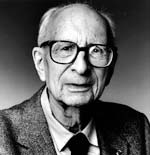
Many people apply Levi Strauss narrative theory to lots of films. I intend to do the same by applying his theory to the film opening sequence.
Zombieland Opening Sequence
Zombieland 2009 Directed by Ruben Fleischer, Genre: Comedy, Horror. Analysis of opening sequence.
There many transitions within the opening sequence of Zombieland. it starts with a camera point of view looking through the destroyed streets of Washington DC and the White House a zombie then suddenly appears and attacks the camera user. The opening sequence cuts to many scenes with people in similar scenarios, this occurs while the narrator (Jesse Eisenberg) explains a set of rules about surviving a zombie apocalypse. Afterwards it cuts to a montage of zombie attacks while displaying the names of the people involved in the making of the film and playing rock music. there are many shots in the opening sequence such as close up, medium shot, long shot and dutch tilt. There are various sounds in the opening sequence to make it much more immersive such as zombie groans, people screaming and blood splattering. Rock music is also played in the background.
I can use techniques such as the dutch tilt and music playing in the background in my film opening sequence.
The Dark Knight Opening Sequence
The Dark Knight 2008 Directed By Christopher Nolan, Genre: Super Hero, Action. Analysis of Opening Sequence
The opening sequence begins with an establishing shot while ambient, suspenseful music is played in the background. The film cuts to a shot focusing on a person on the streets however the camera begins to focus on the mask the person is holding, this is a clue that we are looking at the antagonist's perspective. the scene then cuts to an aerial shot of two people with clown masks using a zip wire to get to the opposite building, this shows that this has all been planned in the story. we then see that some of the masked men run while armed into a bank this suggests that they are robbing it. The rest of the scene shows the masked robbers in the process of robbing the bank. when they collect the money one of the hostages provokes who we think is the joker, the joker walks up to him and puts a concussive grenade in the hostage's mouth here we get a close up shot of the joker when he takes of his mask. Afterwards we see the joker take all the money and escapes using a yellow school bus while the police arrive.
Throughout the the opening sequence there various shots used such as the establishing shot, the close up shot and an aerial shot. Ambient music is played in the background to create suspense and tension which makes the viewers think a major event will occur. I will use some of these techniques in my opening film.
Codes and Conventions
Opening Credits - Displayed at beginning of the film. Shows important members in the production of the film.
Establishing Shot - Gives the location or setting of the film e.g. Big Lebowski - Los Angeles, Goodfellas - New York, 2001:Space Odyssey- Space
Title - Displayed to shows audience name of the film.
Action - Catches viewers attention e.g. Sky fall train fight
Protagonist and Antagonist - Characters are introduced to show viewers who are good or bad.
Non Digetic Sound - Music soundtrack composed to get viewers to focus on the film.
Levi Strauss Narrative Theory
In Media Studies there is a difference between narratives and plots. Plots are a series of events. A narrative is the way those events are put together to be presented to an audience.Many people have made theories about narrative.
A well known theory is Levi Strauss' narrative theory. Claude Levi Strauss was a French anthropologist and ethnologist. Levi Strauss' theory suggests that all narratives could be broken down into binary opposites.
Examples of binary opposites are:
Good vs Evil
Hero vs Villain
Cold vs Hot
Dark vs Light
Freedom vs Oppression
Nature vs Technology
Many people apply Levi Strauss narrative theory to lots of films. I intend to do the same by applying his theory to the film opening sequence.
Creativity
There are many definitions for creativity one of them is the use of imagination and original ideas to create something.
There are theories that are focused on various aspects of creativity, factors that are considered are process, product, person, place. Process describes thought mechanisms and technique for creative thinking.
Product seems to analyse creativity and creative ideas sen as successful. Person shows general intellectual habits such as openness, expertise, curiosity etc. Place shows conditions or situations in which creativity occurs. Creativity is a factor that i will take into consideration when making the film opening.
WEEK TWO: BRAINSTORM, RESEARCH AND ANALYSIS
We brainstormed several ideas for our film as a group:
We all decided on three ideas which we could possibly film. After coming up with these ideas, we decided to go for IDEA #1.
If IDEA #1 became difficult we decided that we would opt for IDEA #3.

Due to our idea considering the genre Rom/Com, we also looked into the codes and conventions of a Rom/Com, which is:
Codes and conventions: Rom/Com:
-Involves elements of: love, boyfriend/girlfriend, love triangle.
- Typical themes: love, romance, relationships, problem within a relationship
- typical characters: group of friends, lovers, family.
Use of low key lighting
Dominant, hegemonic representation of gender: The Female Victim
Extensive use of close up
Distorted sound
Extensive use of narrative off-screen space
Young/teenage characters
Use of hand-held camera: audience identification/realism
Point of view shots
Low angle shots
Dominant, hegemonic representation of gender: The Female Victim
Extensive use of close up
Distorted sound
Extensive use of narrative off-screen space
Young/teenage characters
Use of hand-held camera: audience identification/realism
Point of view shots
Low angle shots

I also decided to look at several camera angles which I would consider in the creation of my film, these include:
- Extreme Long Shot
- Long Shot
- Mid-Shot
- Long Shot
- Close Up
- Extreme Close Up
- Bird's Eye View
- High Angle Shot
- Point of View Shot
- Oblique/Canted Angle
- Low Angle Shot
- Eye Shot
Camera Movements:
- Pan
- Tilt
- Dolly Focus
- Crane Shot
- Handheld Shot
Although many of the shots and movements are achievable, I am aware that as a group we have no budget, therefore things like crane shots would be difficult to achieve.
WEEK THREE: ROLES AND RESPONSIBILITIES
In the process of making a film, there are several roles that need to be distributed amongst people. As we don’t have a budget remotely close to major institutions, many of us will have to double up on roles.
After assessing every member of the group’s skills; we also looked at the different major roles and filmmaking. Whoever’s skills best fit the responsibility was best fit to that role.
(BRAINSTORM OF GROUP MEMBERS AND SKILLS)
(BRAINSTORM OF ROLES IN FILM)
There are many roles involved in filmmaking but as there was only three of us in the group we decided the most important roles were:
Director: The role of this person is to decide the creative, artistic and dramatic aspects of the film, while also guiding the actors to visualise the aim of the film. We felt this role suited Ellie-Mae best because she is very creative and knew what direction to take the film in, she also has very interesting ideas.
Producer: The role of this person is to oversee the project until it is complete and work closely with the director. We felt this role suited Krissy best because she works well with Ellie-Mae and knows how to oversee a project.
Editor: The role of this person is to assemble the recorded footage into the final product . We felt this role suited Oisin (myself) best because i am very familiar with editing and know many editing techniques.
WEEK FOUR: TREATMENT
AND SCRIPT
As we draw closer to our filming date, we
finalised our idea and wrote a treatment for it. To make sure we were on the
right path, I researched what a treatment was.
A treatment is a brief outline of
what our film is about as a short summary.
It is written in prose and is the
step just before a first draft of the script.

WEEK FIVE: SHOT LIST
AND STORYBOARD
We plan to begin production of our
film after five weeks of pre-production work. The last few things that we
needed to complete is a storyboard.
The purpose of the storyboard is to show a series of pictures (usually sketched) that tell a story or sequence. This still helps the creators pre-visualise sequences of the film before it is made.

